Showing posts with label Arctic. Show all posts

Monday, November 12, 2007

The Garden Outside & the Gardens Inside


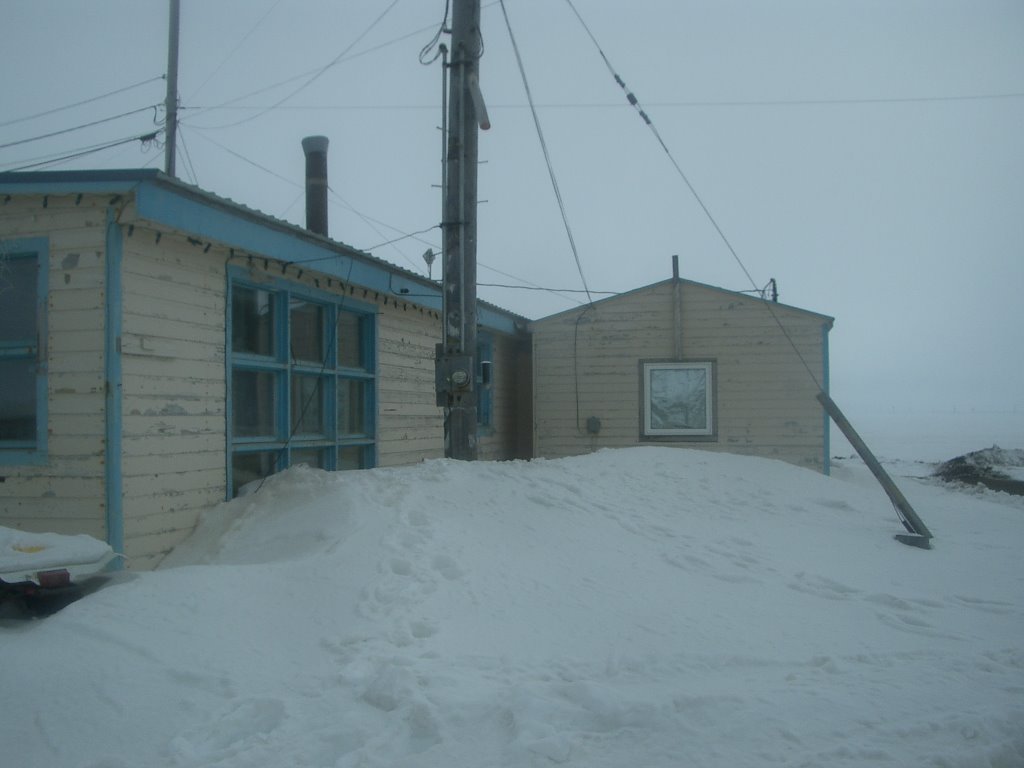
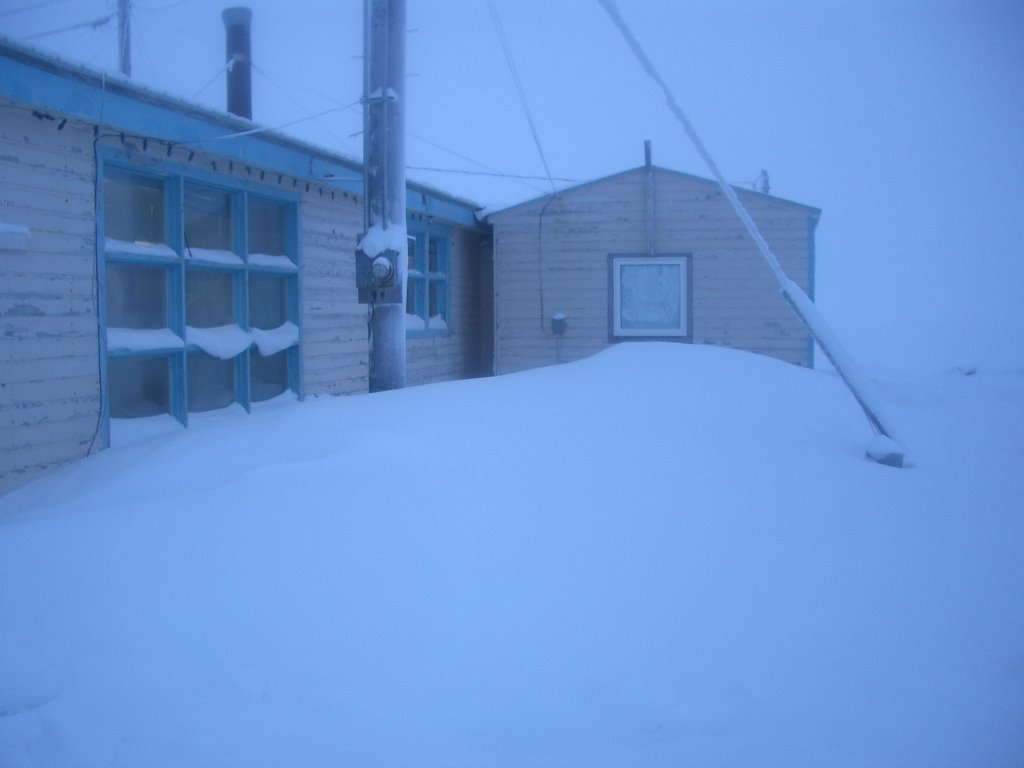
While it is certainly not what we would call winter here in Barrow, since the temperature is still well above 0˚F, for most folks it would qualify. The Tundra Garden is draped in a blanket of snow, with mushroom hats on the sections of log that serve as garden funiture (stools, tables, whatever is needed) in warmer times. Although much more snow will accumulate, and it will be scuplted by the wind in various and ever-changing shapes from fantasy, the overall state of affairs won't change much for the next 6 or 7 months. We're down to less that 3.5 hours of sun today, and going fast.

That being the case, what's a gardener to do? I do have a fair number of house plants that live by windows with fluoresecent strips above them. The mother-in-law's toungue does very well (5 feet high and blooming regularly) and the Christmas cactus blooms several times a year. However, I have a yen for fresh vegetables.

SO, prompted by an article in the Anchorage Daily News by Jeff Lowenfels, garden writer extrodinaire, I bought a couple of Aerogardens. (If you follow the link, keep in mind he gardens in South Central. They have a couple more months than I do.) They are self-contained hydrponic gardens, with lights. They come with a pre-planted seed kit, although you can get stuff to use your own seeds. I set them up over the weekend. They are cute, the lights are very bright, and they hum gently when the pump is running. I'm finding the bright islands of light very alluring, and I must admit I keep checking the herb one to see if the basil is up yet (I know--it's too soon, but in a couple days...). I'll keep you all posted.

Monday, October 15, 2007

Sustainability-A Blog Action Day view from the TundraGarden

Today is Blog Action Day. Although I usually stick to the TundraGarden itself, today I am looking at sustainability. Sustainability is a fairly broad topic, and there's an awful lot of discussion and information available about balanced, sensible, non-greedy use of resources in a locally appropriate manner. That's really important, and if we would all just do that, the giant experiment that we are all taking part in on an involuntary basis might run a bit slower, or even grind to a halt. That would be a really good thing, and if you're interested in trying to move things in that direction here are a couple of resources:

The Union of Concerned Scientists Greentips newsletter
The Nature Conservancy Carbon Footprint Calculator

In my non-gardening life, I'm an archaeologist. That means I tend to look at things over time scales much longer than even those of the average gardener. My particular professional interest is something called "Paleoeconomy" which is a fancy way of saying I'm interested in how people fed, clothed, and housed themselves in the past. One thing that becomes apparent very quickly when one studies this is that the world in which we live (topography, climate, biota) is continuously changing, and has apparently been doing so since well before human beings evolved. There are of course changes from day to night, from day to day, month to month, year to year. But there are also longer-term changes, at least some of which appear to occur on cycles of various lengths, from decades to many millennia. Just like waves in a wave tank, the cycles can amplify each other, or cancel each other out.

Unfortunately, as our society has become urbanized, and developed truly extraordinary engineering prowess, most people (other than the few fishermen, farmers, and hunters that are left) seem to have lost touch with this fact. The result is that many things are being designed as if we lived in a static world. Incredibly expensive houses and infrastructure are built on barrier islands (which by definition do not stay put), in areas only a few feet above sea level (which has been rising for some time to thermal expansion of the oceans), on top of faults or in areas where the soil is going to turn to Jell-O with the first serious earthquake, and other similarly silly locations. Once this happens, large amounts of resources are spent on trying to maintain this infrastructure, particularly when it belongs to the well-to-do and well-connected.

Great effort is put into protecting certain areas as "critical habitat" for threatened species, without considering that a few hundred years ago these areas were not the same as they are now (e. g. Izembek lagoon eelgrass beds). Sadly, no effort is put into figuring out where those endangered species found that habitat in the past, nor attempting to project where they might find that sort of habitat in the future as changes continue. Currently, it is all too easy to assume that an area is not important to a species (which it may not be at the moment), and that it is therefore suitable for some other use, and never realize that it may be the critical habitat of 300 years in the future. Thus, all this effort may be simply prolonging the decline of the species.

Current legal and regulatory frameworks tend to assume a static world. We really need to be taking a much longer view, and working to change those frameworks in such a way that people are able to move toward a more flexible, and yes, sustainable, way of living. For example, communities that wish to relocate after flood damage rather than simply rebuilding at their original high-risk location face huge hurdles. It is far simpler and quicker (although neither simple nor quick) to get assistance to rebuild in place, sometimes repeatedly. There has to be a better way. Changing the status quo is going to take a lot of pressure from a lot of people, but we've gotten ourselves into a bit of a hole, and the only sensible thing to do is stop digging now. It is not the time to be playing "after you, Alphonse."

Friday, October 05, 2007

Northern Light


A couple days ago we had one of those gorgeous fall days that come along so rarely. Winds were calm for much of the day, and the sun was shining. Temperatures dropped overnight, and the lagoon behind my house froze over.


It has been snowing for a couple of weeks, but not sticking; now it is. The birds have mostly left for the south, with the exception of the gulls, who are waiting for fall whaling, which means feasting for them as well as the human community. A few were left, hopping around in the snow looking for seeds.

Sunday, September 16, 2007

Fog & wind

Well, the weather is more typically fall in Barrow, although still quite warm. I think we set at least 3 record highs for date just this month and it's only half over.

Meanwhile, the garden is pretty much in full fall mode, which means everything is brown except a few sedge/grass clumps.

The lemming is no longer in residence. It hasn't been seen since a bunch of owl feathers appeared, so the best bet is it became lunch for baby owls. In any event, things got a chance to grow a bit taller than they were able to when the lemming was here. Sheep have nothing on lemmings as mowers, it turns out.

If it gets a little nicer, I'll go take pictures of the bathtub/water feature, which finally got some plants in it this summer.

Thursday, August 30, 2007

Long Hiatus & Willow Rust

Well, it certainly has been a while. Life happens. I've been incredibly busy with work, and didn't get to do much gardening, or garden photography.

This has been a very weird summer, with essentially no rain in June or July. It was good for the flowering plants, especially the River Beauties. No hot caps needed to get a lot of flowers.

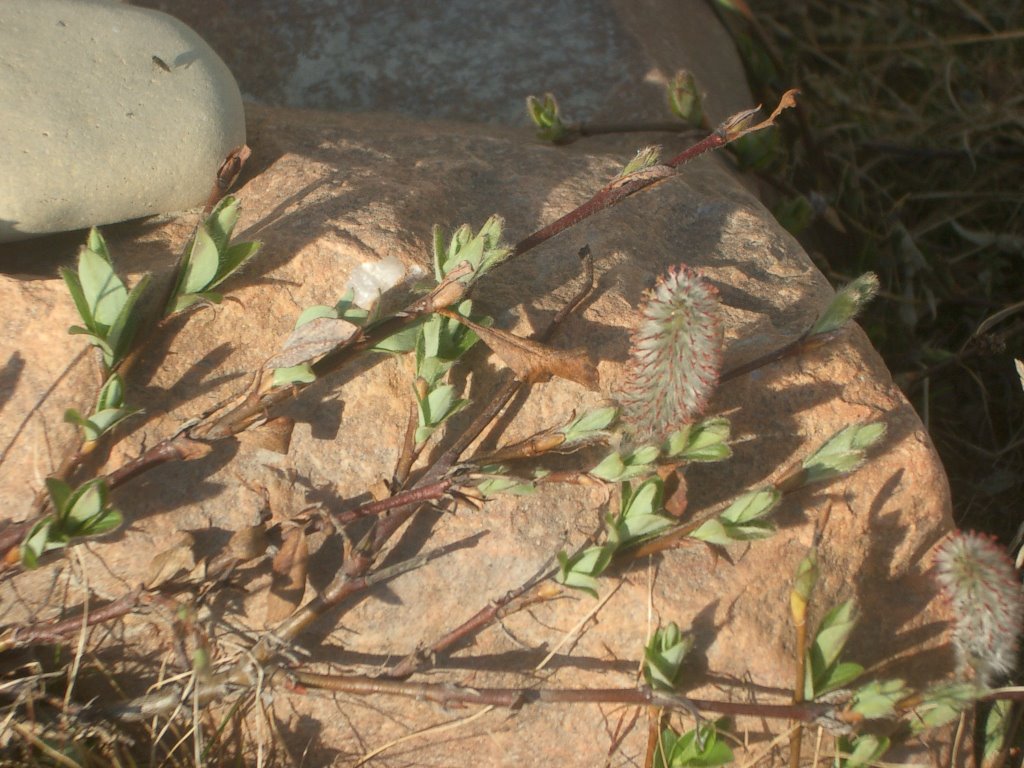
However, it seems to have been a bit hard on at least one species of willow. The Salix longifolia usually has a few spots of rust, but this year it is essentially golden with rust, except for near the drip line, where I'm guessing it got a little more water. Turns out one of the folks coming to a conference my husband & I are organizing here actually is a specialist in Arctic willow rusts, so I spent Saturday PM collecting leaf samples for him. They are currently being pressed, and I'll hand them off to him in late September.

Saturday, July 22, 2006

Snow in the Tundra Garden

The Tundra Garden spends a good deal of the year covered with snow. One might imagine that in summer, short as it is, it would remain snow free. That would be wrong. One of the beauties of living in Barrow is that the weather is a bit, shall I say, variable. However, we do get snow in July most years. This was no exception. July 6th I came out to go to the field to find the garden with a good dusting of snow.

The garden was well-sprinkled with white. The willow leaves held the snow, so that most of the garden was frosted with white crystals. It was really quite lovely, although the fact that I was going to be spending a rather cold day in the field, with students (some of whom were probably under-dressed and would therefore require watching for hypothermia) got in the way of true appreciation of the aesthetics of the situation.


Ironically, the garden was just really getting going
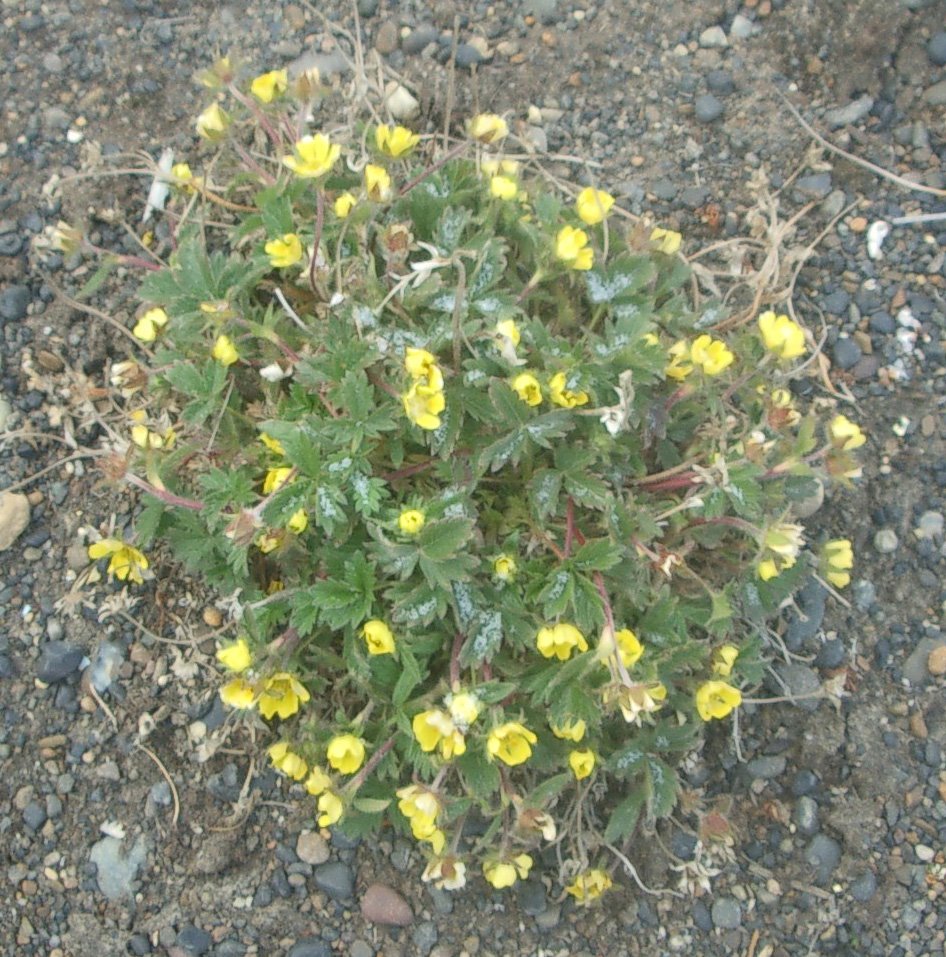
on blooming at that point. The Arctic Cinquefoil (Potentilla hypartica) was in full bloom,


and the Heart-leaved or Chordate-Leaved Saxifrage (Saxifraga punctata L.) was in fine shape. This is the Nelsoniana subspecies, one of 5 rather differing subspecies which occur in Alaska, according to Hulten. It is, however, the only one of them seen near Barrow.


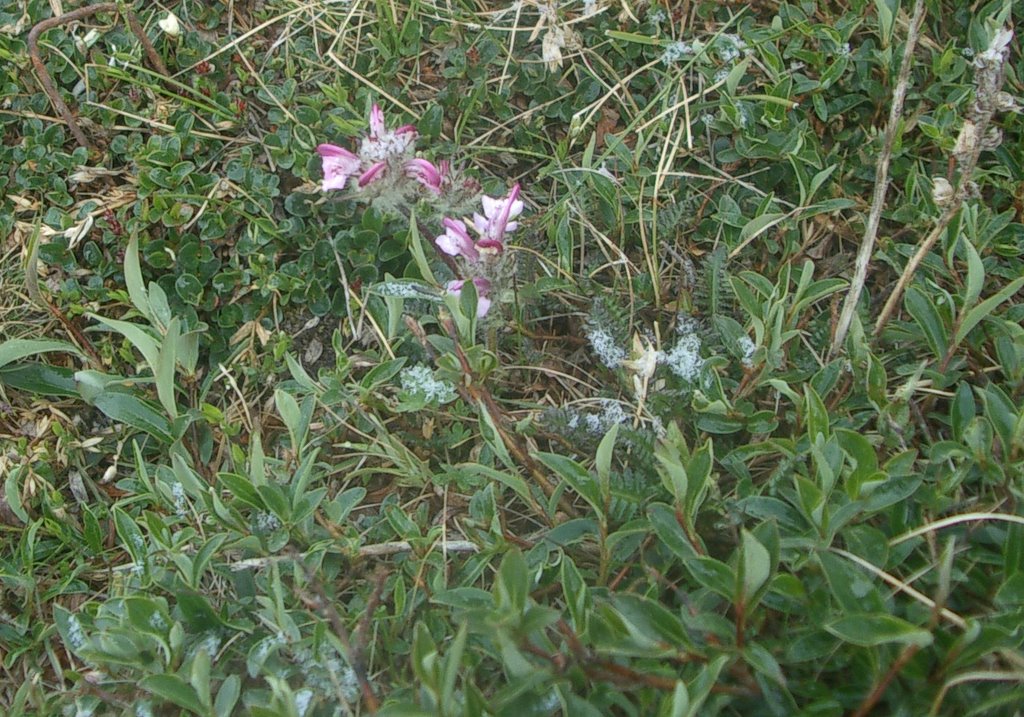
Even the Lousewort (Pedicularis sp.--I'm still trying to verify species, Langsdorffi, Kanei or sudetica) was starting to bloom.


Of course, by that evening, when I got in at quarter to seven, the sun was out, the snow was gone, and the garden was blooming. You can see a hot cap in the left mid-ground. It is on the River Beauties, as I decided that I would get them to bloom in Barrow if it could be done. More on them later.


Tuesday, July 11, 2006

A Rather Sorry Showing by the Coltsfoot

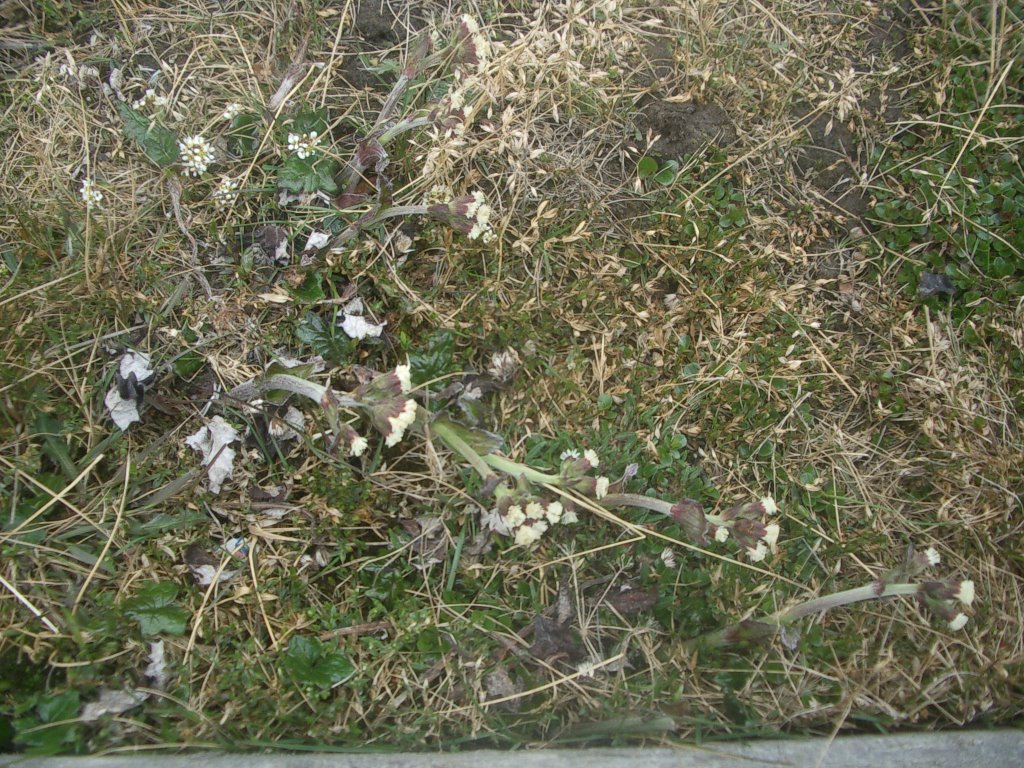
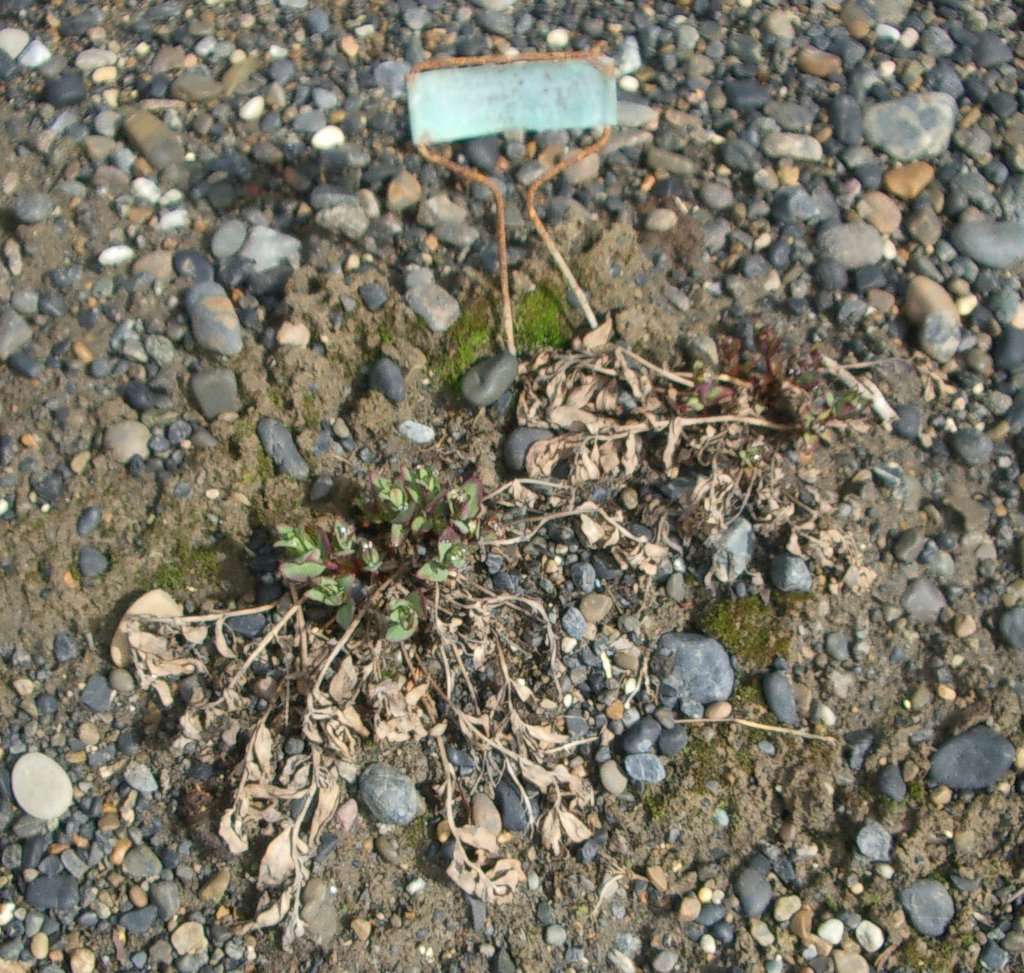
Coltsfoot (Petasites frigidus) usually does well here where it decides to grow. It likes disturbed soil, so it is found along roads, around buidlings, and also as part of the succsessional sequence on well-drained frost boils on the tundra. It seems to be fairly rampant, so Iwas a little dubious about having it in the tundra garden. However, it showed up, it is a tundra plant, and it does smell lovely (a bit like sweet alyssum), so I let it stay. What I have has nearly pure white flowers, while most plants have a distinct purpleish cast to the flowers. I do pinch all leaves which show up where I don't want it, however. It appears to spread by roots, with leaves showing up first, and then flowerstalks the next year. The "pinch the leaves" strategy keeps it where it belongs.

This year the coltsfoot just hasn't been very impressive. The flower stalks have been lying rather flat, and the flowers are only about half open. I'm not sure why. I took a trip south along the coast which involved a couple of miles of road through tundra, and the coltsfoot was really spectacular there. It was also incredibly fragrant, with clouds of aroma several hundred feet away (despite the fact that it was windy as always).

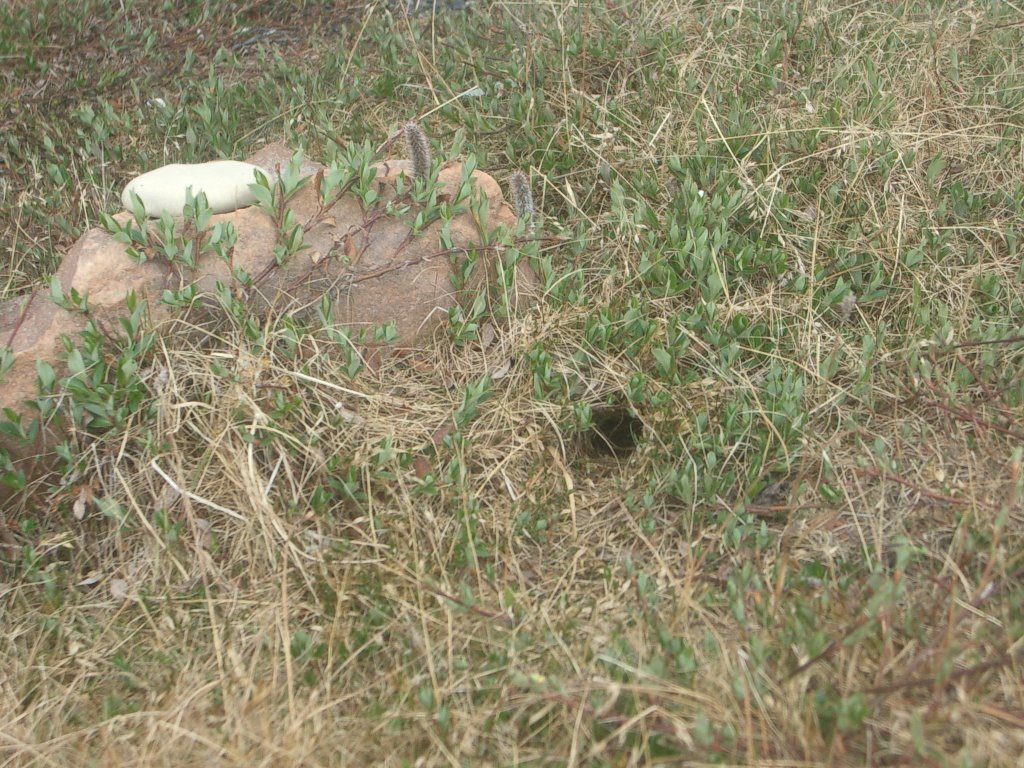
The big event of the next to last week in June was the arrival of a lemming to set up residence in the tundra garden. It is a fairly high lemming year, which means there are lots of snowy owls (and snowy owl researchers) in evidence here in Barrow. It also means that there are lots of lemmings on the move trying to find a place to set up housekeeping. A young one found the tundra garden and moved in. S(h)e nibbled a bunch of grasses, but seems pretty oblivious to the flowering plants. I haven't gotten a picture, but am still trying. I'm not sure how the lemming will stay unless a mate shows up, and I don't think they will survive if they try to overwinter, since lemmings seem to range much further than the confines of the tundra garden, and it is in the middle of a gravel pad.

Sunday, July 09, 2006

Buttercups in Mid-June

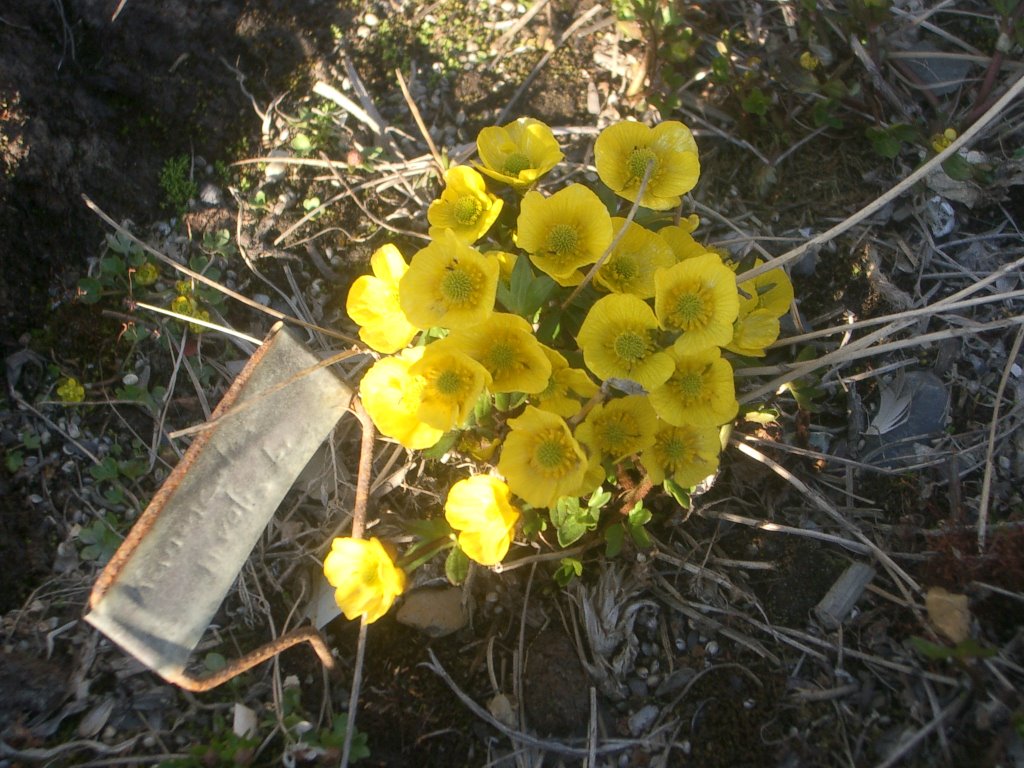
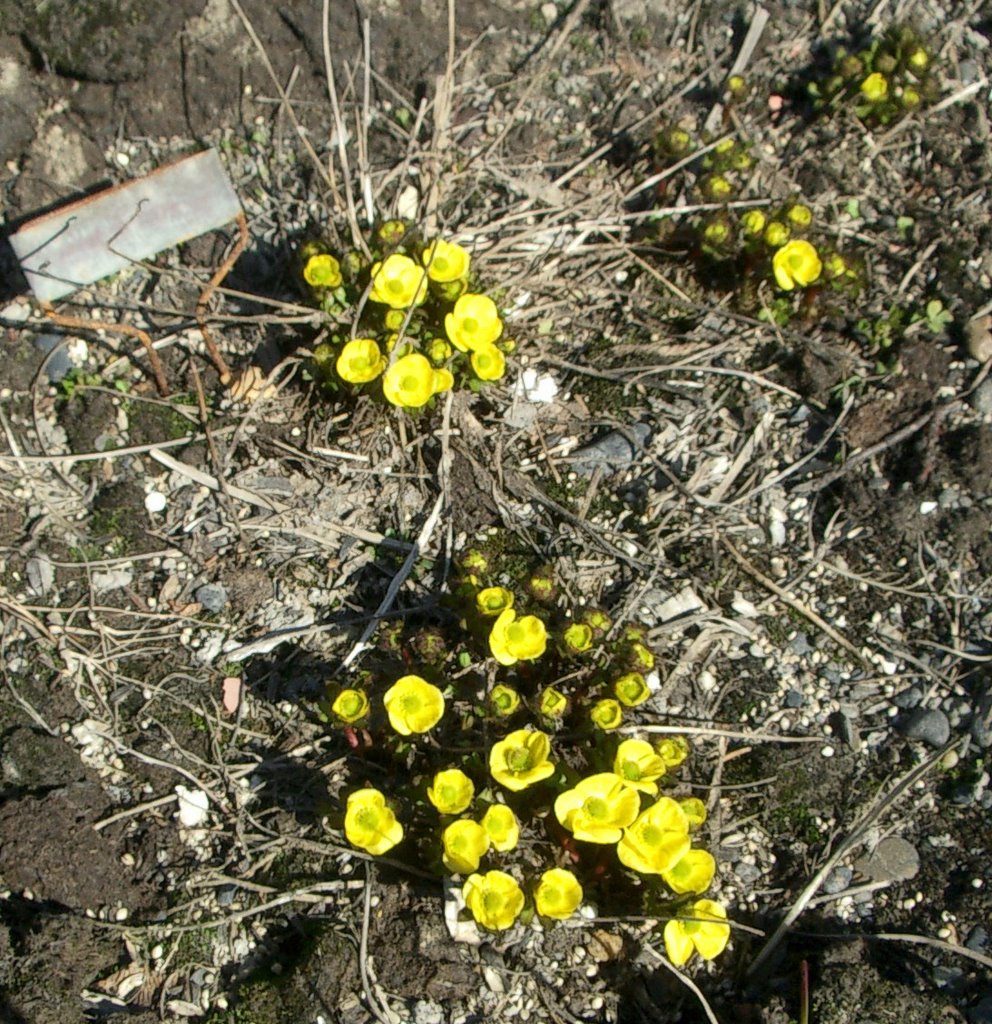
By mid-June, the buttercups were blooming. The first to bloom are always the Snow Buttercups, Ranunculus nivalis, which actually start growing and setting buds before the snow is gone. They are quite showy, with quite large flowers for a tundra plant. The color is an intense yellow that is possitively incandescent when the sun hits it.


Since they track the sun (when it is out), they can be truly spectacular.


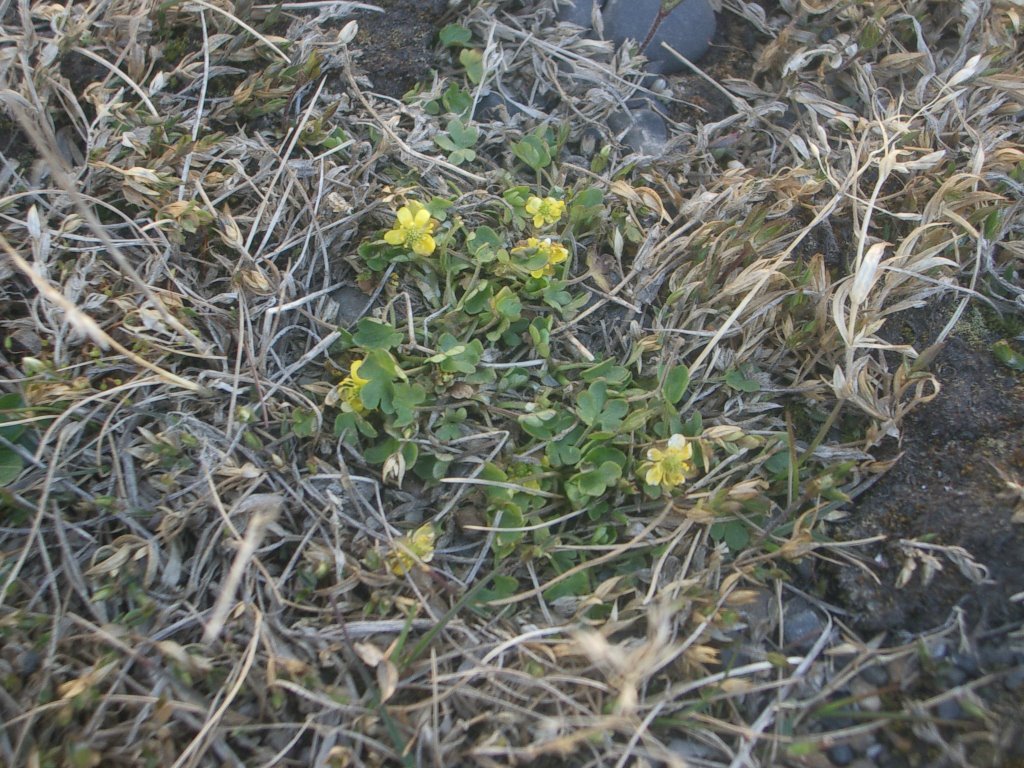
The Pygmy Buttercups (Ranunculus pygmaeus) were a bit behind the bigger ones.


The other plants were only starting to reawaken after the winter.


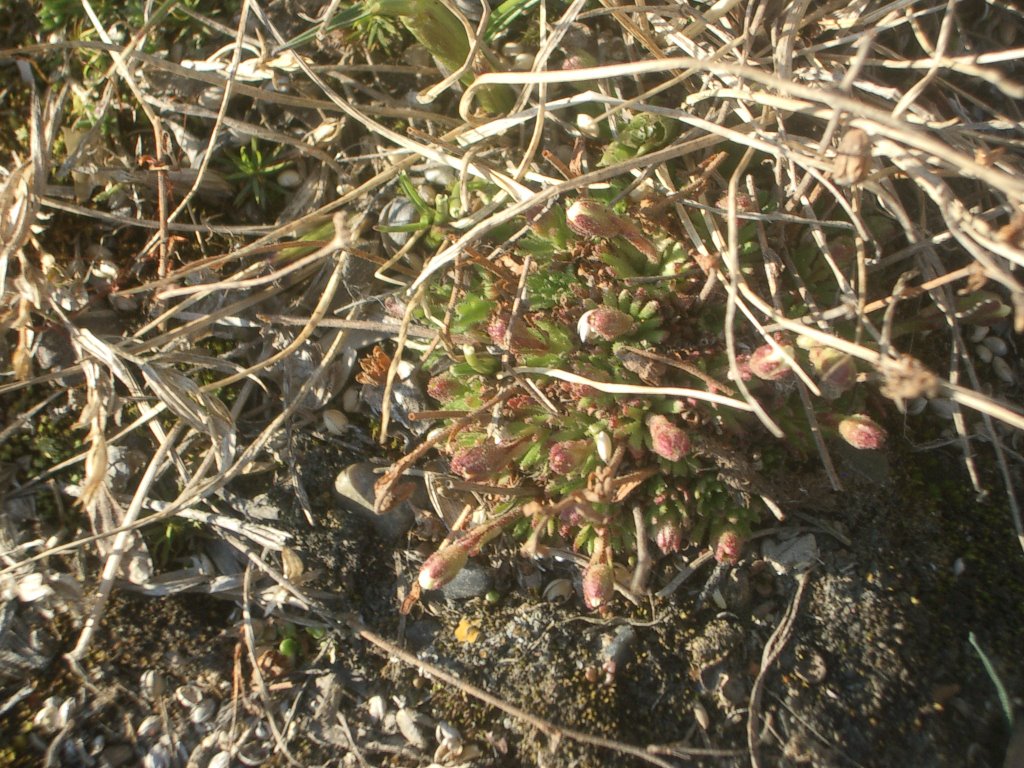
The Tufted Saxifrage (Saxifraga caespitosa) had swelling flower buds,


the Sea Lungworts or Oysterleaf (Mertensia maritima) were growing new foliage,


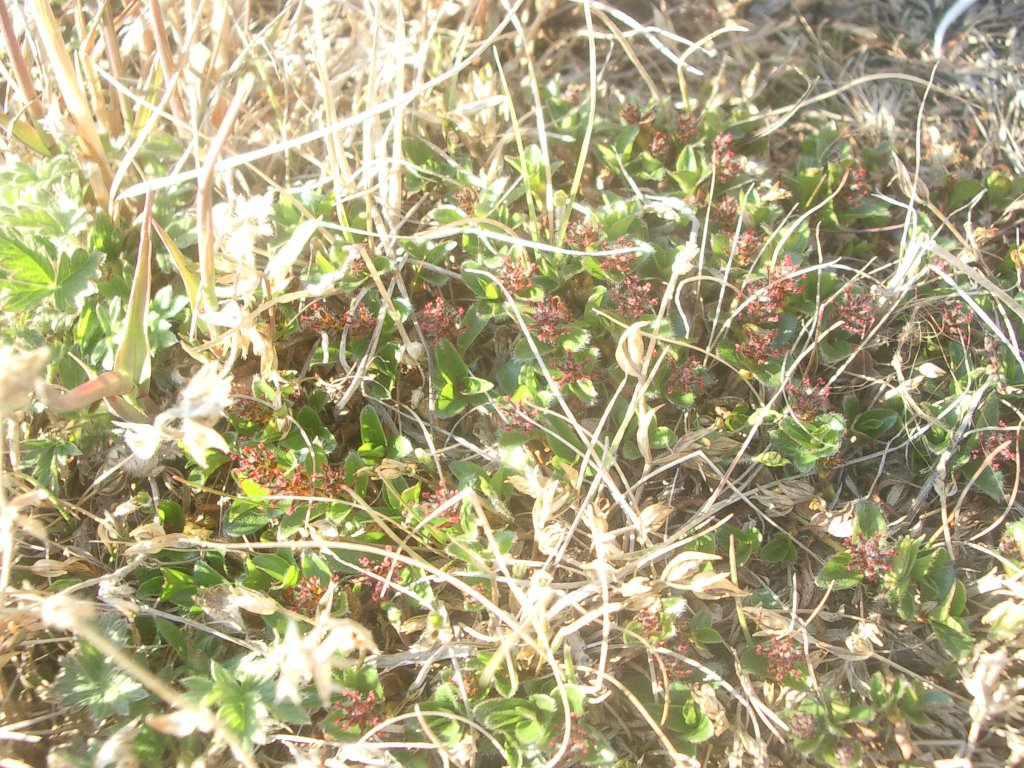
and a couple of willows were blooming. I'm not sure of the exact species of Salix, but since just the key for Salix in Hulten's Flora of Alaska is 3 pages long, I don't feel too bad.


The longer-leaved of the willows really likes the micro-climate provided by the rock.

Saturday, July 08, 2006

In Which the Saga Resumes

There has been rather a lag between posts here. The garden was just sitting there for months under snow, and I got busy with life. But it's really starting to take off now, so here's an update.

The snow started to melt back in May.


May 10


May 20th


The garden really got exposed around the end of May. It didn't look all that beautiful, pretty much brown and tan, with just a few specks of green struggling through the dead plants from last year.


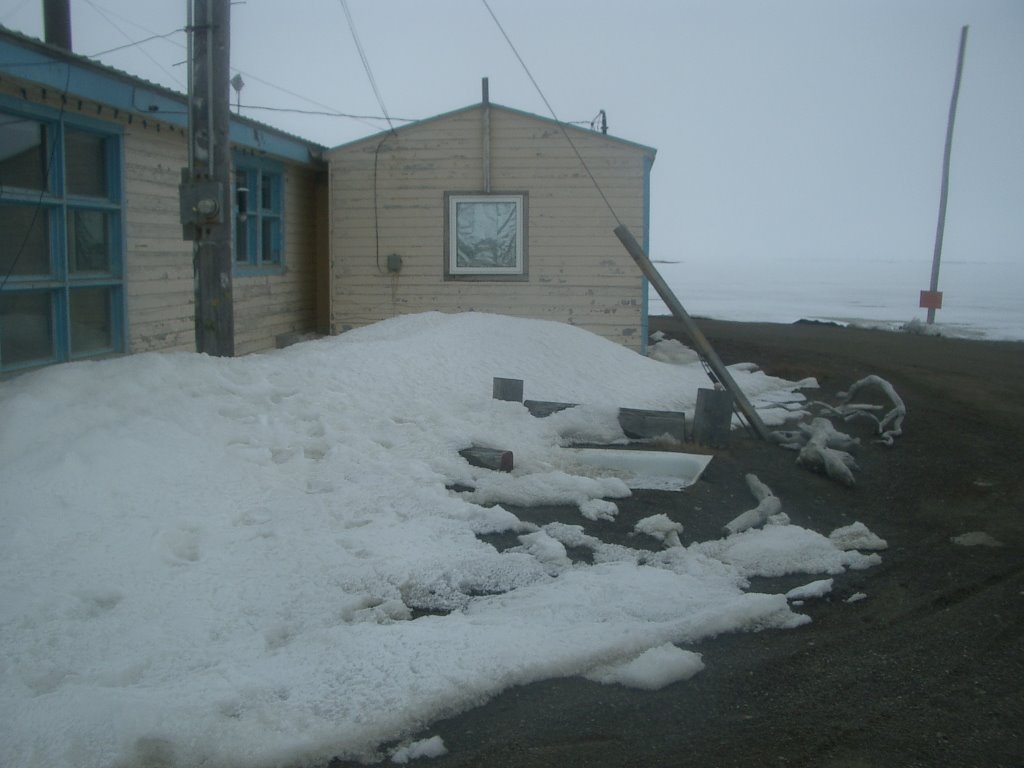
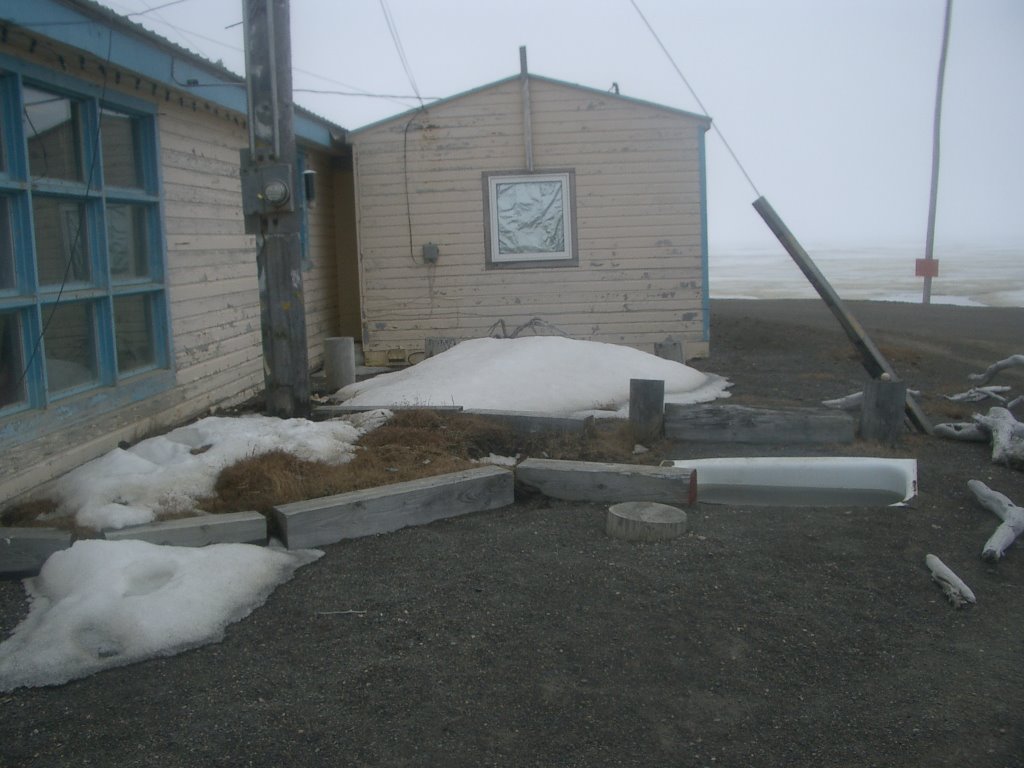
This is May 28th, and a rather foggy day it was, too. The front of the willow tundra area and the little bowl for ranunculus were exposed, as was the bathtub which is gradually (oh so gradually) being turned into a water feature for some rather nice tundra pond plants I want. The earliest of the plants were just starting to put forth green shoots at this point.


At this point I took a trip to upstate NY to take my daughter to spend part of the summer at my Mom's place. I was within a couple miles of Sign of the Shovel's town garden (maybe less--I did spend some time in Saratoga while I was home), but mostly I did some pruning and weeding, and spent a lot of time talking garden design with one of my brothers who has moved home from Philadelphia. He's a landscape artist
with an MFA who got into landscaping to pay the rent (landscpae painting being less than trendy these days) and evolved into a landscape designer. He's really got a good command of plants, and can see what things will look like down the road (and paint it for that matter) and has some pretty neat ideas for reviving and renewing the gardens at my Mom's.

Tuesday, April 04, 2006

In praise of volunteers


The Tundra Garden is at least in part educational in purpose; I like having it handy so I can take people outside to show them a plant in real life rather than in a book. Because of that (and because I am not that fond of the Zen garden look outside my house) I am quite liberal regarding volunteers. I've felt otherwise in other gardens elsewhere, but here they get to stay. It is interesting to watch the succession process in gravel, as well.


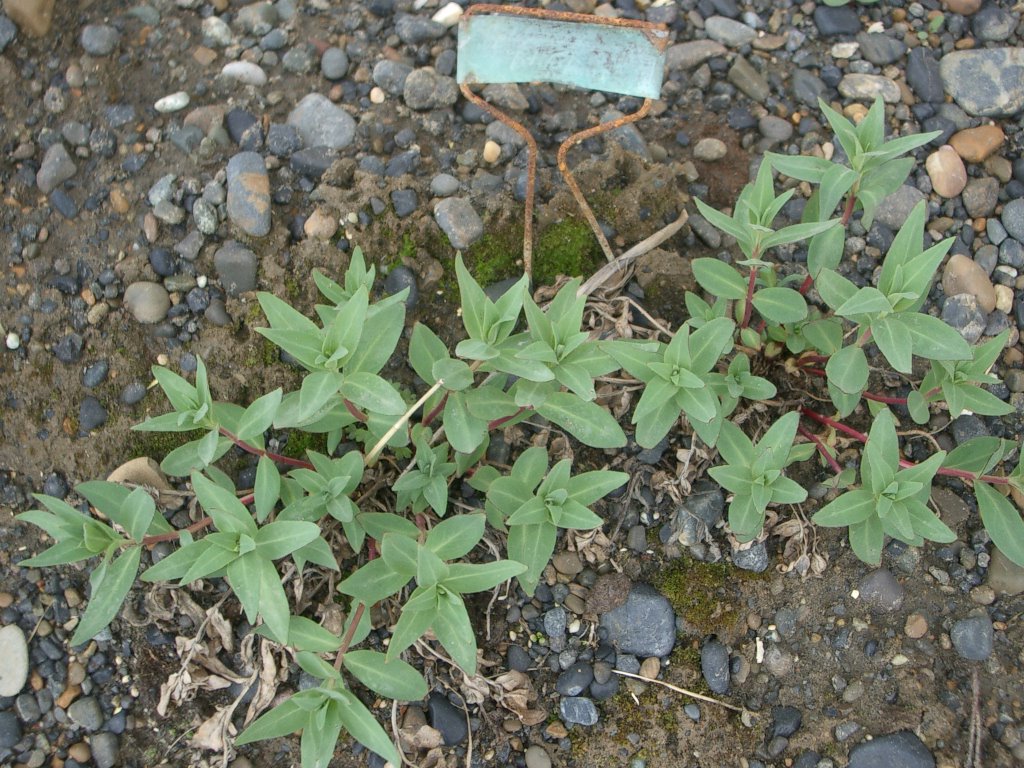
The first plants which show are Cochlearia officinalis L. which are otherwise known as Scurvy Grass. Why grass I'm not sure, since they don't look the least bit like grass. When they first make their appearance in the spring, they look a bit scrofulous until the new leaves outgrow the foliage from last year.

After they grow some leaves and begin blooming, they are pretty little white things, and smell quite nice on a warm day if you can get your nose close enough. They come in various sizes. As far as I can see, they seem to grow bigger for a number of years. Eventually they put up a longer flowerstock and then die.


s you can see I let them grow where they show up, including mixed into clumps of other flowers, like the poppies. My favorite is an area where really nothing else has taken hold yet. It's between our house and the road around it on the pad. The cochlearia have taken root all over the space, and they look like petite doilies scattered on the ground when they are all in bloom. There are a few clumps of a small grass showing up now in the wake of the cochlearia.

I've been encouraging these plants with watering and foliar feedings. I was using fish emulsion, but it made the garden stink and wasn't always available. So I switched to Miracle Gro.

Before anyone goes ballistic, I've been using compost since I was a kid. My parents had about 5 acres in lawn, which needed the leaves raked, and the place wasn't called Tall Trees for nothing. Then I got ponies and boy did we have great compost. Alas, composting doesn't seem to be an option up here unless I want to rent heated indoor space. Things freeze here, and once the pile is big enough, and moist enough, they don't thaw. I do have a compost pile here. The pumpkin from Halloween 1996 didn't look any different than the one from 2005 before the snow fell. As an archaeologist, I can attest to the fact that organic material can stay frozen with minimal decay for hundreds of years here. Call me impatient, but since I don't expect to live that long.... Miracle Gro. I'd worry more if the runoff didn't go directly into a sewage lagoon.


Tuesday, March 21, 2006

Signs of Spring in the Arctic

The passing of the Vernal Equinox is, of course, the official beginning of spring. The length of day and night is equal on that date, and then the days become longer and the sun rises further north and higher until summer Solstice. Here the farther north thing only applies until the 9th of May, at which point the sun commences circling the sky until August 2nd. It does keep getting higher until the solstice, though.

Given that we are so far north, and that the snow won't melt from the permanently frozen ground for at least a couple of months, it might not seem like it could feel like spring. Granted, people have been getting ready for whaling (a major spring activity here) for months; umiaqs (skin boats) are out bleaching and curing. The high school basketball teams are at the state championship tounament and plans for the Spring Festival are in full swing.

Despite that, today it felt like spring. It warmed up to about 0 F, and was sunny, with not too much wind. I had to drop something off at the main office of the company I work for. The building they are in also holds the local courthouse and a mini-mart, and Barrow does not allow smoking indoors in public places or offices despite the large number of people that smoke, so there is almost always someone outside smoking when you enter the building. For months, they have been huddling out of the wind like musk ox on the tundra, smoking fast to get the nicotine on board and get back where it is warm. Today, though, a fellow was sitting on the steps (metal grate--so they get cold) enjoying his cigarette in a leisurely fashion. I said something about the nice weather and he smiled a huge smile and said "It's spring!" And he was right. So there you have it, a sign of spring in the Arctic.*

*Disclaimer:
Kids, don't try this at home. TundraGarden emphatically does not advocate or support cigarette smoking, as it is hazardous to your health and the health of others.


Tuesday, March 07, 2006

Arctic Buttercups; or a Preview of Things to come


Connectivity between camera and Mac was not the only issue on the recent trip; connectivity between Mac and Internet was just as big a deal. So it has been a while. Kodiak was beautiful on the sunny days, which bookended my visit. In between, it rained, snowed, sleeted, melted and repeated, making for rather messy walking. No good shoes at these meetings...


The Tundra Garden remains asleep under its snowdrift. Since the snow gets so deep, and the plants are so minute, I have yet to solve the problem of what to do to get winter interest in the garden. Given that winter lasts 7 or 8 months, this is a conundrum I would like to solve. The snowdrift changes, of course, as snow falls and is whipped away by the winds. As they bend around the building, they carve the snow into truly fantastic shapes; troughs, improbable-appearing overhangs, layer cakes of different shades of white. None the less, something besides snow would be nice as a change.

Since this is a gardening blog, and it will be a while before the Tundra Garden does anything this spring, I thought maybe people would like to see some picutres of what will be appearing in a couple of months. The first flower to really make an appearance is the Snow Buttercup (Ranunculus nivalis). The first picture is it in bud. In the next picture the flowers are starting to open.

There is another buttercup which can be found around Barrow, the Dwarf Buttercup (Ranunculus pygmaeus Wahlenb.) which is reportedly circumarctic. It is very petite, even for a tundra flower, and the petals are relatively smaller than those of the snow buttercup, giving quite a different effect. The color is the same, a clear brilliant yellow that just grabs the eye, especially after months of white. They start just a little bit later, but they are in bloom together, and finish about the same time.

Sunday, February 26, 2006

2 (!) MORE blizzards last week

We had two more blizzards last week, although they were nothing much compared to last Sunday. Winds probably didn't gust over 40, nothing closed, and we didn't have any really obnoxious drifting. It wasn't much fun walking to work, but when properly dressed it wasn't a big deal. Of course, it takes me less than 10 minutes on a normal day...

It actually didn't increase the size of the drift on the tundra garden, maybe shrank it if anything. The size of the drift is always a concern. If it is too small, the plants won't get as much protection (snow is a wonderful insulator). Also, since the tundra garden is a bit better drained than most tundra, being underlain with frozen gravel instead of organic-rich permafrost, the less snow, the less water. Barrow is technically a desert, so we really don't get that much rain (although the last few summers we have had some real gullywashers and even thunderstorms--not at all usual). On the other hand, like most gardeners, I like to see something happening out there. The season is very short and one really wishes it would get started. It is very tempting to shovel some snow off a little later in the spring to speed up the process. So far I have resisted, but I'm sure most northern gardeners will sympathize.

On the other hand, once things start to happen in the Arctic, they go fast. Things change visibly in the course of a day. I usually look at the garden at lunch and after work (before work too if I'm up early enough :-) ) and there is usually something new to see!

I am currently in Anchorage for a meeting, and will go on to Kodiak for another meeting. With the wonders of Alaska Airlines scheduling, I can't get home until the evening of Monday, 3/6. I haven't got a way to get pictures from my digital camera to my PowerBook on the road worked out. I have been spoiled since I had a Mac Duo (still the niftiest laptop I've owned, I think It was just cool) and pretty much won't drag a lot of weight. All of which is to say no recent pictures until I get home.

Anchorage just had snow today, something which has been sorely lacking. They had to cancel the Fur Rondy dog sled races, and they've shortened the ceremonial start for the Iditarod because they didn't have much snow with which to cover t
he course . Given the lackadaisical (to a person who grew up in Upstate New York, anyway) approach to snowplowing in Anchorage, it's a bit surprising they actually need to put it on the streets. I'm not sure why they don't plow better. Perhaps most of Anchorage's residents originally came from places where it rarely snows (California, Washington, South Texas) and aren't aware that it is possible to have clean streets shortly after big storms. What I do know is that if streets in Buffalo (or any place in Upstate New York--even poor rural counties) looked like the streets in Anchorage do after even a little bit of snow, heads would roll, and political careers would go down in flames. It must cost people here a fortune for fender benders.

Monday, February 20, 2006

Weird Weather Indeed

I was just reading a post by Kathy on Cold Climate Gardening about weeding in February, in which she commented on the odd weather this winter. While yesterday's blizzard was more or less normal for Barrow in winter (wind might have been a little high, but they are not close to the record), we have had weird eather this month.

With only 20 days gone in February, we have set new records for date on 5 days (that's 25%). Wes set a lowest minimum for date of -51F on 2/4. We set highest max for date on 2/14 (35F--1 degree below the all time, of instrumental record, anyway, Feb max of 36F), 2/15 (34F), 2/16 (34F), and yesterday (30F). The most amazing part is that it was above freezing in Barrow for 3 straight days in February! That's just not right!

We have also set three records for date for the more esoteric "highest minimum temperature". They were 2/15 (19F), 2/19 (15 F) and today (also 15F).

The climate is warming, folks, no if, ands or buts. And I have a bad feeling that this isn't just a couple of the various climate cycles overlapping and amplifying each other. Not a good thing. By the time it gets warm enough to grow tulips and lilies (personal favorites and main features of my former garden in PA), the tundra garden will be about 8' under water due to sea level rise.

Sunday, February 19, 2006

A Rather Windy Day in the Tundra Garden


I was going to put up pictures of flowers, and the enlarged drift on top of the tundra garden, but sometimes you just have to talk about the weather. Around lunch time it was blowing 58 mph, with gusts over 70 mph. Fortunately, the winds were from the southwest, so it was actually abouve zero, but that just meant we got heavy snow with the wind! I took a couple of pictures of the garden from the living room window. The first one shows the garden with the ever-stylish power pole on the left, and the guy wire at about mid-frame; the other is the view across the tundra garden to thenearest house, which is the ghostly thing in the background.

The winds have dropped to about 38mph, with gusts only to 55mph, but they are more in the west, and it's getting colder. The window for our spare bedroom is now entirely covered with a drift, which wasn't there at all yesterday. The drift on the tundra garden seems to be growing too.

Thursday, February 16, 2006

River Beauty


Here is a picture of the Epilobium latifolium at its height (so far). If you look closely, you can just see a few buds starting to form. Alas, some little birds seem to eat them. I'm not sure if it is the snow buntings, the Savannah sparrows or the redpolls, but those are the most common birds in the garden.

E. latifolum usually has bright pink flowers (like the more familiar fireweed), but apparently they can occasionally have white flowers. There are pictures of it flowering on the Web. It is apparently edible (although it isn't big enough to really provide much sustenance) and reportedly it is used in traditional Tibetan medicine. I found one reference listing it as being hardy to Zone 5 (!), but obviously it is good to at least 2a.

Monday, February 06, 2006

Brief History of the Tundra Garden--Part 3.


The majority of the plants I added in the first year were from tundra in Barrow. Some of them actually came from areas around NARL. One of these is Epilobium latifolium, common names River Beauty or Dwarf Fireweed. There was a patch of these near the main science labs, the only one known in the Barrow area. I moved a few, and they've taken off. The books say they are wet area plants, but they were growing in gravel where I got them, and I have to say the ones I plopped in gravel seem to do better than the ones in the little depression.

That's some of the Epilobium above in the center of the picture. I label the flowering plants, as well as samples of sedges & willows, since part of the purpose of the Tundra Garden is educational. I've never seen this bloom in Barrow. I have gotten it to set buds, but the birds seem to like them, and eat them as soon as they are ready to start opening (kind of like deer and tulips). This year I am going to try hot caps to keep the birds off and give extra warmth, if I can keep them from blowing away.

The labels are copper, and can be engraved with a pencil. They weather nicely, and don't stick out like sore thumbs in the garden, but they are prone to twisting when pushed in and the copper then tends to pop off. I'm going to replace them this summer if I can. I think it doesn't really matter if the labels are big, since most of the plants are so small you have to bend down to really see them. The 12" x 12"s I built the box out of have worked well as benches for looking at the garden, although that certainly wasn't the original idea; they were simply what was handy.

Friday, February 03, 2006

OK, now it's COLD!!

Woke up this AM to find that school was cancelled due to cold. Huh? They hardly ever cancel school here. Then they did the weather. -54 F, with a wind chill of -78 F. OK, that's cold. Everyone else joined in in calling off work, so I've got a day at home.

I managed to get a picture of the Tundra Garden under its snow drift about half an hour ago. If you look at the right hand side of the picture, the white isn't snow, it's ice fog. It's actually warmed up a bit, though. We don't get ice fog here as much as, say, Fairbanks, because it's usually a bit too windy and we don't have any mountains around at all to help with temperature inversions. But when it gets cold enough and the wind drops, just heating houses will do it.

Wednesday, February 01, 2006

Brief History of the Tundra Garden--Part 2.

Once the main box was built around the tundra, I started transplanting things from various places around Barrow into the Tundra Garden. I mostly focused on flowering plants. I tried to take mostly things from drier tundra, since the gravel pad under the garden meant that the drainage was better than most places where plants are right on top of permafrost.

Transplanting while in flower seemed a bit weird; that's not the usual method of proceding in more temperate climates. The growing season is so short here that by the time the ground is thawed enough to allow digging a decent size chunk containing the target plant, it's in bloom. Waiting until it was done means there isn't enought time for the plant to settle in.

I put a small pit in one corner of the garden and lined it with plastic under gravel and soil. I hoped that this would hold water in a bit and let me grow some of the flowers from moister parts of the tundra. In cases where I wasn't sure what a plant wanted, I'd scatter them through the garden a bit.

Friday, January 13, 2006

Brief History of the Tundra Garden-Part 1.

Shortly after I moved to Barrow, I learned that there had once been a tundra garden outside our picture window. I was missing my garden in the Lower 48 (and what gardener doesn't like a challenge?) so I decided that this garden should be revived. No one remembered what it had been like, so I started from scratch.

It was clearly going to take some doing, as there was no soil, just a 5 foot deep gravel pad. I mentioned my plan to our next-door neighbor, and she had the summer maintenance people drop off some big slabs of tundra (like turf) next to the house. I manhandled them together to make a fairly small, rather irregular patch of ground. My neighbor was able to get the maintenance folks to bring some 12" x 12" sections I'd seen over, and I built a box to contain the tundra, and keep it from melting back into the pad.